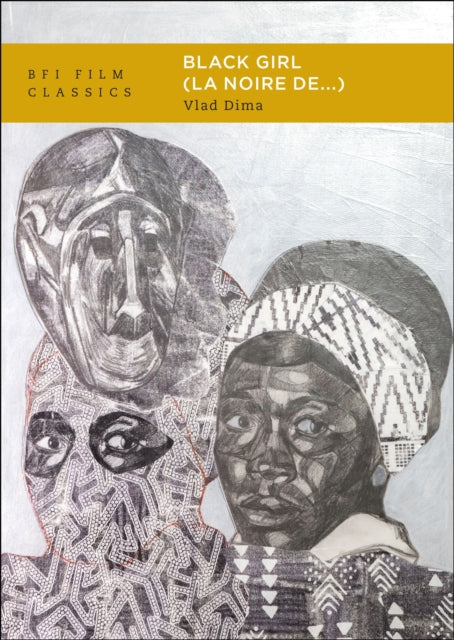
Black Girl (La Noire de...)
Black Girl (La Noire de...)
Couldn't load pickup availability
Author: Vlad Dima
Senegal | Film theory & criticism | Individual film directors, film-makers | Film guides & reviews | National liberation & independence, post-colonialism
Published on 12th June 2025 by Bloomsbury Publishing PLC (BFI Publishing) in the United Kingdom as part of the 'BFI Film Classics' series.
Paperback / softback | 104 pages, 60 bw illus
135mm x 190mm x 7mm | 166g


Ousmane Sembène was one of the greatest, most groundbreaking filmmakers in the history of cinema, an acclaimed novelist, and the most renowned African director of the twentieth century. Black Girl was his brilliant, blistering debut. Released in 1966, it won the Prix Jean Vigo at the Cannes Film Festival that year. The film is about a young Senegalese woman, played powerfully by M’Bissine Thérèse Diop, who moves to France to work for a wealthy white family as a nanny, but quickly discovers that life in their apartment is a prison, both figuratively and literally; but it is also a searing, nuanced critique of the lingering colonialism in the supposedly postcolonial world. Vlad Dima's study of Black Girl argues that the film helped to map the future of African cinema. He situates it within its postcolonial context, considering its adaptation from the eponymous short story first published in 1962. He examines the performances of Mbissine Thérèse Diop (Diouana), Anne-Marie Jelinek (Madame) and Robert Fontaine (Monsieur), considering the ways in which they embody or subvert postcolonial, French archetypes, and then goes on to examine the technical aspects of Sembene's filmmaking, such as his innovative use of framing and aural composition. Finally, he traces the film's lasting influence on African cinema, from Sembène’s own Xala (1975), to Safi Faye’s Mossane (1996), Joseph Gaï Ramaka’s Karmen Geï (2001), Jean-Pierre Bekolo’s Saignantes (2005), and Mati Diop's Atlantics (2019).