Skip to content

A History of Ireland
A History of Ireland
Couldn't load pickup availability
Author: Dominic Connolly
Northern Ireland | Ireland | BCE to c 500 CE | c 500 CE to c 1000 CE | c 1000 CE to c 1500 | Modern period, c 1500 onwards | British & Irish history | Medieval history | Early modern history: c 1450/1500 to c 1700 | History: specific events & topics | Social & cultural history | Industrialisation & industrial history | Maritime history | Cultural studies | Media studies | Violence in society
Published on 14th October 2025 by Amber Books Ltd (Amber Books) in the United Kingdom as part of the 'History in Photographs' series.
Hardback | 224 pages, Halftones, colour; Halftones, black and white
251mm x 193mm x 21mm | 876g


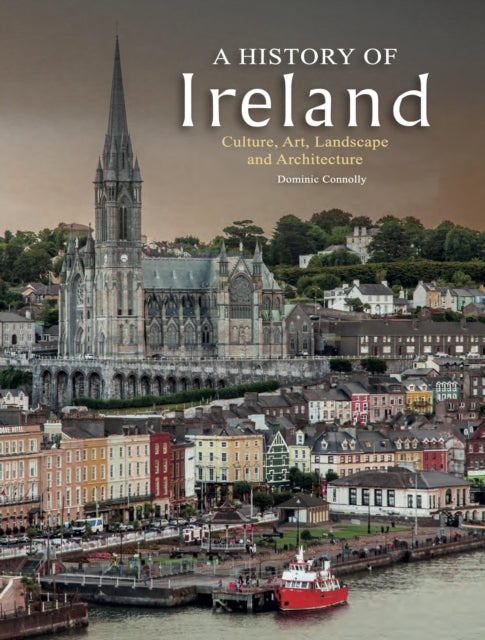
The history of the island of Ireland is both complex and connected to the wider world: it was the first place in the British and Irish archipelago to be settled by Christian monks, and has suffered Viking invasion, Norman colonization, British decimation, mass migration to the New World, civil war and eventually independence for Éire in the early 20th century. Despite its often troubled past, Ireland is today a dynamic island with a blossoming economy and culture. Arranged chronologically from ancient times to the 21st century, History of Ireland provides a pictorial exploration of a land that is well-known but often little understood. Discover the remains of the country’s many Iron Age hill forts, such as the atmospheric stone fort at Grianán Aileach; explore the first Christian colonies in the monastic settlement at Glendalough in County Wicklow; read of the legend of St Patrick, and stood atop a hillside and banished snakes from Ireland – prompting all serpents to slither away into the sea; discover the Book of Kells, an illuminated manuscript of the Celtic Gospel written in the 9th century; learn about the Plantation of Ulster in the 17th century, where English and Scottish settlers established Protestant communities, causing lasting communal strife; understand the Easter Rising and the traumatic war for independence, which led to Ireland’s current political shape; and experience modern Ireland, a place of prosperity, with thriving cities like Dublin and Belfast alongside beautiful countryside.