Skip to content

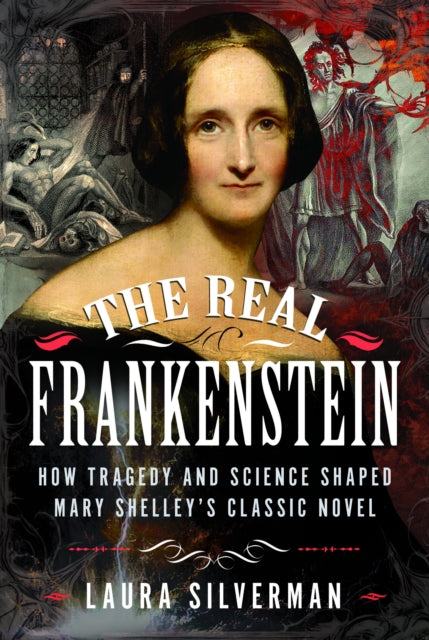
The Real Frankenstein : How Tragedy and Science Shaped Mary Shelley’s Classic Novel
The Real Frankenstein : How Tragedy and Science Shaped Mary Shelley’s Classic Novel
Couldn't load pickup availability
Author: Laura Silverman
Biography: literary
Published on 30 May 2026 by Pen & Sword Books Ltd (White Owl) in the United Kingdom.
Hardback | 224 pages, 32 mono illustrations
234 x 156 | 0g
One dark and stormy night in 1816, Mary Shelley started the story that was to become the first science-fiction novel, Frankenstein. She was on holiday in Geneva and Lord Byron, a poet with rock-star status, had challenged his friends to write a ghost story. But there’s more to it than that. How did a teenager come up with a literary classic? The Real Frankenstein explores Mary Shelley’s influences. First, it looks at love and loss in Mary’s life, including the death of her mother, Mary Wollstonecraft, and her rocky relationship with Percy Shelley. It then highlights the pioneering scientists of Mary’s day, from Luigi Galvani, an Italian physicist who made frogs’ legs dance using electricity, to Sir Humphry Davy, whose lectures bear remarkable similarities with parts of Mary's book. Finally, it examines some of the philosophical and political theories at the time. It makes space for John Locke and Jean-Jacques Rousseau, slavery and early theories of race.
This kaleidoscopic approach aimed at the general reader shows Frankenstein in all its richness. Far from being a simple ghost story written on a dark and stormy night, the novel is full of ideas that get to the heart of Mary Shelley herself.
Share